Drywall and Plaster Repair in Streator, IL
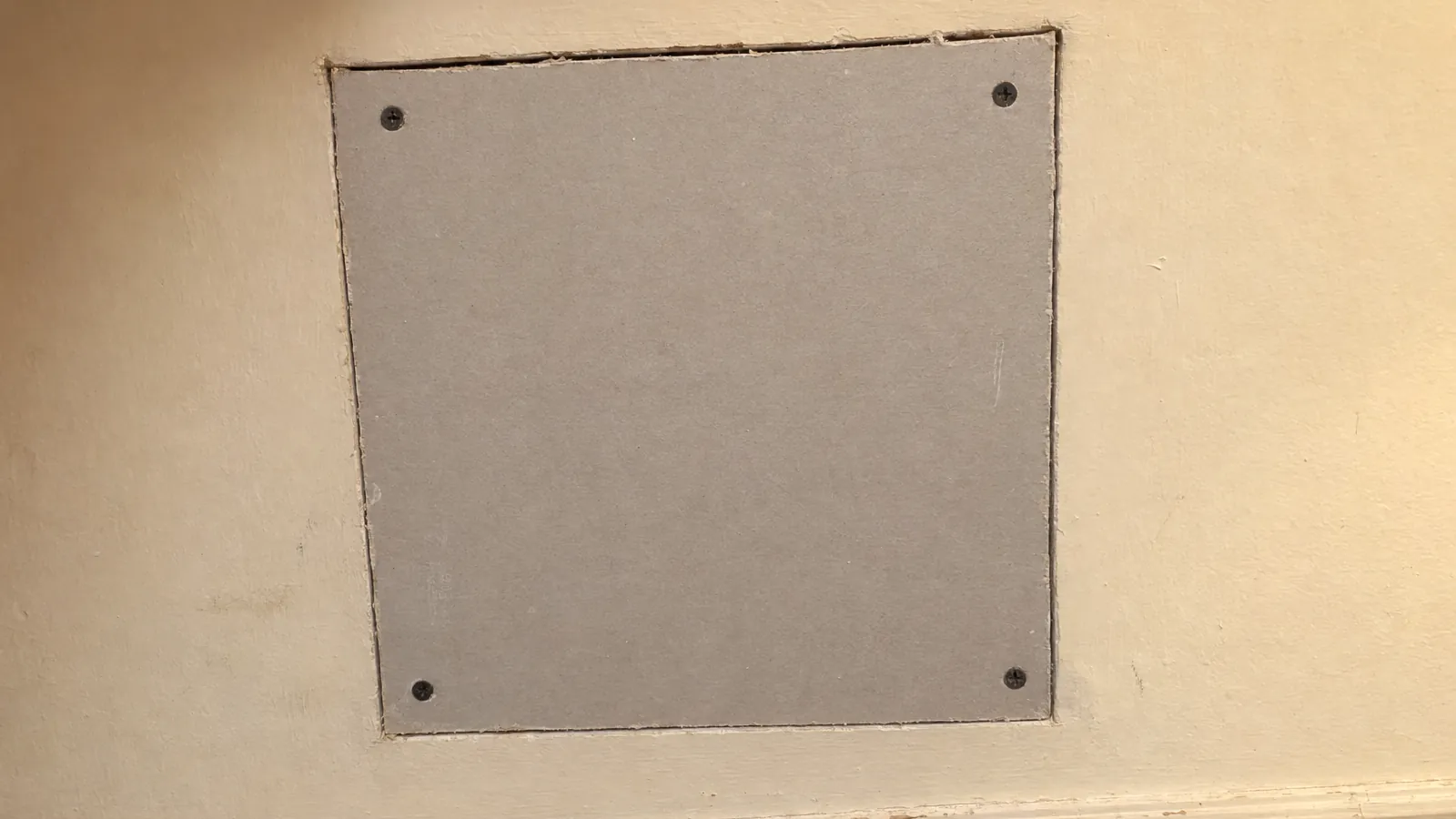
Split plaster, water-marked basement board, brown halos from eave ice and punched-in holes, fixed and worked into the surrounding texture so nobody's eye stops on the spot.
- Cracks running out from door and window corners in older plaster
- Damp, stained drywall low on finished basement walls
- Brown rings on upstairs ceilings after a winter of ice along the eaves
Call 7 days, 7am–9pm
Ring that number and a nearby pro calls back to size up the damage and quote it.
Older houses
Plaster and lath
Streator got a town charter in 1868 and became an incorporated city in 1882. Coal and then glass bottles kept it growing until the head count topped out near 17,000 around 1960; it has shrunk since. So the housing runs from Victorian frame houses through the postwar decades.
Here is why that matters. Before gypsum board became the norm in postwar building, interior walls were generally troweled plaster on strips of wood lath. Plaster grips its lath with little blobs called keys that ooze between the strips and harden. Snap enough keys and a section lets go, droops a fraction and starts to crack and shift. Verdict on a hairline in tight plaster: small. Verdict on a spot that gives under a flat palm: bigger, since it needs reattaching to its wood strips first.
Postwar houses have quirks of their own. Early gypsum board was usually nailed up, not screwed, so little round nail pops in a line along a stud are typical and simple. A seam that splits above a door frame normally reflects seasonal framing movement more than sloppy taping.
A plain caution. Paint applied before 1978 may hide lead-based layers underneath. EPA rules say anyone paid to disturb paint in a pre-1978 home must follow lead-safe work practices. Before sanding starts, find out how the dust gets captured. There is more on plaster in the plaster and drywall crack repair page.
Two districts
East Broadway and Park Street
East Broadway
Two East Broadway houses made the National Register: the Ruffin Drew Fletcher House at number 609, a Stick-style home put up in 1890, and the Silas Williams House at 702, a Queen Anne dating to about 1893. Homes of that decade carried plaster over wood lath, often with tall walls and heavy trim. Expect cracks angling off the top corners of doors and along stairwell walls. A sensible repair leaves the old casing on the wall instead of prying it off for access.
Downtown on Park Street
Streator's public library at 130 S. Park St. opened in January 1903, designed in the Classical Revival style. Wikipedia notes that a lot of the original downtown has been torn down. What remains from that era was finished in plaster as a rule, which makes any patch there plaster work before it is drywall work, with the surface built back up to the old plane instead of sanded down flat.
What gets fixed
Four repair types
- 01
Plaster and drywall cracks
Settlement lines, split seams and plaster drifting off its lath, fastened and taped so they hold far longer than filler.
- 02
Basement water damage
Lower walls that soaked up a leak, opened higher than the dampness reached and rebuilt after the water problem is solved.
- 03
Top-floor ceilings after ice dams
Halos, flaking paint and soft gypsum near outside walls once roof meltwater has found its way inside.
- 04
Hole patching
Anchor holes, doorknob punch-throughs and bigger openings, backed and taped and textured to suit the wall.
Prefer the overview? The Service list sums all four up on one page.
Quote request
Repair details
Describe the damage and roughly how big it is. Prefer to talk? Call (779) 237-7134.
Call 7 days, 7am–9pm
Photos help most. They can be sent by text to the same number.
What comes next: someone near Streator who repairs drywall rings back, talks through scope and builds a quote.
Before the work
Floors, vents and doorways
Dust is the piece of a wall job that surprises people. Sanded joint compound turns to talc-fine powder, and a running furnace will carry it into every bedroom. Plan for it up front.
- Floors. Canvas or a roll of builder's paper runs from the work area to the door, its seams taped so grit stays on top.
- Furniture. Things near the wall get carried out or draped in poly sheeting. Anything precious, move it yourself ahead of time.
- Vents. Registers in the room get masked over, and the furnace blower should sit idle during sanding.
- Doorways. On bigger patches, a plastic curtain with a zip opening seals the room off from the hallway.
- Sanding. A vacuum-attached sanding head, or wet-sponge smoothing on small spots, keeps most of the powder out of the air.
Mention allergies, toddlers or pre-1978 paint on the first call. Each one shifts how much containment makes sense.
Honest expectations
Dust, drying and paint
Most of a wall repair is drying time. Compound cures layer by layer, with no shortcut between, so a middling patch commonly needs two or three short trips spread across several days. Powder-mix setting compound hardens chemically and can shave a day off a bigger job.
Fresh primer looks bright white against your old paint. Normal. The final paint coat is where patches usually betray themselves: walls fade with sunlight, and dabbing leftover paint on one spot tends to leave a shiny or dull halo visible from the side. Rolling the whole wall, edge to edge, is the reliable cure.
Rake a flashlight beam sideways along the plaster and even a well-feathered patch may show a faint outline to someone hunting for it. Century-old plaster has waves of its own, so the aim is a repair that fits the wall, not one flatter than everything around it.
The about page lays out every stage, phone call through primed surface.
Triage
Soon or someday
Handle soon
- A ceiling bulging with water. Step one is the breaker: kill power to every light fixture and fan anywhere near the sagging area. Step two, empty the room underneath. Pooled water weighs a lot, and wet gypsum can drop.
- Wet drywall in a basement. Every extra day damp raises the odds of mold on the back side. Track down where the water comes from and start drying.
- A crack that widens month to month, especially alongside doors that have begun to bind. That hints at framing movement, and a patch would only cover up the question.
Fine to wait
- Hairline plaster cracks that have not changed in ages. Cosmetic, and best tackled next time you repaint.
- Nail pops and small dents. Irritating, harmless, and cheaper when bundled.
- Old dry stains, after the drip is cured and the gypsum underneath feels solid. No hurry; wait until you trust that the drip has quit.
Nearby
LaSalle and Livingston towns
Streator straddles LaSalle and Livingston counties. Repairs get arranged in the surrounding places as well as in town.
- Kangley, a village three miles northwest, perched over the Vermilion.
- Grand Ridge, a village north of the city, between Streator and Ottawa.
- Ottawa, LaSalle County's seat, at the meeting of the Fox and Illinois rivers.
- Long Point and Dana, two small villages south-southwest of the city.
- Reading Township, just south-southwest of town in Livingston County.
- Pontiac, Livingston County's seat to the southeast, also on the Vermilion.
The full list of towns covered has a little more on each one.
Scope
Small, medium, large
Small
Nail pops, screw holes, dents and hairline cracks. One or two skim passes, a light sand, primer. Frequently one brief trip with fast-setting compound. Truthfully, a handy owner can manage plenty of these with spackle and a 2-inch knife.
Medium
A doorknob punch-through, a few feet of split seam, a crushed outside corner. Backing or new bead, tape, then three coats that each need to cure, so count on two or three trips plus texture at the end.
Large
A soaked ceiling section, or a basement wall opened up below a flood line. Ruined board out, new board in, then tape, coats, texture, primer. Several days in all, and the water problem gets solved before any of it.
On money: Fixr's national cost page for drywall repair, dated January 2025, lists holes at $60 to $200, cracks at $60 to $330 and water damage in one room at $400 to $800. They describe the whole country; nobody has priced your Streator wall yet. Square footage, texture, ceiling height, plaster or gypsum, and whether paint is in the deal all push the figure around. The local pro's quote is the real number.
Myths
Wall repair misconceptions
- "Caulk is enough for a plaster crack."
- Briefly. Caulk stays rubbery, and paint over it never looks like paint over plaster. A moving crack wants paper or mesh tape set in hardening compound.
- "A water stain means the board has to come out."
- Frequently false. When the panel has dried out and feels solid, stain-sealing primer and a coat of paint may finish it.
- "Old plaster should be torn out and replaced with drywall."
- Intact plaster takes a patch fine. Gutting a whole wall for one crack is wildly out of scale.
- "Every hole needs a pro."
- Not so. Small holes and dents suit a homeowner. Paying someone starts making sense when backing, tape or texture enter the picture.
More short answers sit in the homeowner guides.
Next step
Scope and quote
Describe the damage. If honestly a tub of spackle would do, that is what you will be told.
A pro close to Streator follows up and tells you plainly how much work the wall needs.